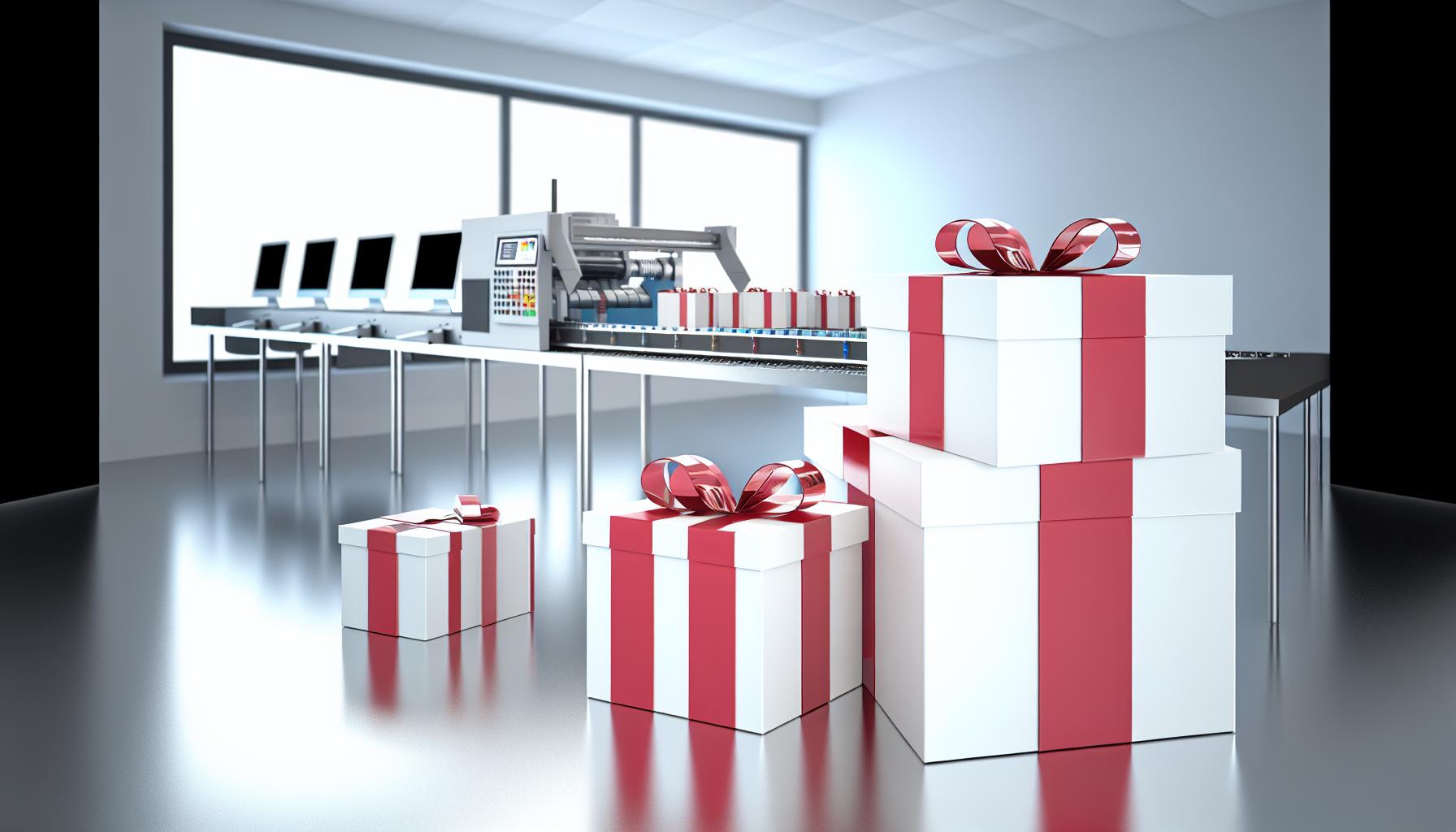
Automated Gift Packaging Production: A Key Solution for Enhancing Efficiency and Quality
As market demands for packaging quality and production efficiency continue to rise, automated gift packaging production has become a significant trend in modern manufacturing. By utilizing advanced packaging equipment and automated production processes, companies can significantly reduce labor costs while simultaneously improving packaging quality and production stability, helping them maintain a competitive edge in a fierce market. This article explores the practical applications and benefits of automated gift packaging production, focusing on four key areas: core packaging automation technologies, equipment configuration, system integration, and operations and maintenance management.
Core Packaging Automation Technologies and Process Optimization
The key to automating gift packaging lies in transforming traditional manual operations into mechanized and intelligent processes. Core technologies include automated feeding, alignment and positioning, automatic deployment and sealing of packaging materials, as well as robotic palletizing and boxing. Advanced PLC control systems work in concert with servo motors to enable each stage to be completed efficiently and coordinately, ensuring stable packaging speed and quality. Taking a multi-stage alignment conveyor as an example, each belt section can be independently speed-controlled. When paired with servo drives, this allows the packaging process to maintain precise positioning even at high speeds, adapting to a variety of gift sizes and shapes.
Selection and Configuration of High-Performance Packaging Equipment
Selecting packaging equipment that meets production needs is the foundation for achieving automated production. Equipment typically includes automated feeding systems, packaging machines, sealing machines, labeling machines, and robotic arms. For instance, high-speed automatic packaging machines, combined with belt-type automatic positioning feeding systems, can effectively increase packaging output and save labor. Furthermore, modern packaging equipment often features color touch screens and PLC controls, offering intuitive user interfaces for easy setup and monitoring. Equipment brands frequently utilize internationally renowned components from companies like Siemens and Festo to ensure stability and ease of maintenance.
System Integration and Customized Design
An automated gift packaging production line requires holistic system planning and design based on production scale, product characteristics, and factory space. The various stages—automated feeding, packaging, boxing, and palletizing—must be highly integrated, while also considering personnel workflow and safety regulations, to achieve maximum production efficiency. Customizable combination packaging systems can adjust equipment configuration and operational processes according to requirements, providing the flexibility to handle different gift sizes, materials, and packaging styles. Modular design also facilitates future expansion and upgrades to meet evolving market demands.
Operations, Maintenance Management, and Continuous Improvement
The stable operation of an automated production line relies on comprehensive operations and maintenance management. It is advisable to establish regular maintenance and inspection schedules, supported by the equipment's intelligent monitoring systems, to detect anomalies early and make adjustments. Additionally, operators require professional training to become proficient in equipment operation and troubleshooting. Utilizing data analysis and production reports enables the continuous optimization of production parameters and processes, thereby enhancing packaging efficiency and quality. A robust O&M system not only extends equipment lifespan but also ensures the production line operates efficiently and stably over the long term.
Conclusion
Automated gift packaging production, which combines advanced packaging equipment with intelligent control systems, effectively enhances production efficiency, reduces labor costs, and strengthens packaging quality. From the application of core technologies and equipment selection to system integration and O&M management, each link is interconnected and indispensable. Production managers and automation engineers should prioritize overall planning and customized design to ensure the automated packaging system aligns with the company's long-term development needs. Through continuous improvement, they can maintain a competitive advantage. In the future, with technological advancements and market diversification, automated gift packaging is set to become an industry standard, driving the packaging industry towards higher levels of smart manufacturing.